

.png)
Temple is a level blockout created for a 5v5 hero tactical shooter. The project was heavily inspired by Valorant, and was created within Unreal Engine 5. It features two bomb-sites, breakable doors, and a basic visual theme. For this project, I created all elements, including blueprints, concept sketches and the full blockout.


Level Design Breakdown
Research
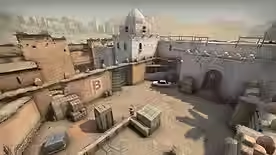
To kick off this project, I researched the design principles behind multiplayer maps in competitive shooters, with a focus on Valorant and CS:GO. I studied the development process and analysis of some of the most iconic maps, such as Dust 2 and Ascent. Based on my findings, I created a checklist of essential elements needed to design a balanced and engaging map that caters to both casual and competitive gameplay.


-
Easy to learn
The most popular maps are the ones which anyone can easily learn, this is especially important to newer, more casual players.
-
Balanced
The game is perfectly balanced for both attackers and defenders, leaving the win down to skill and tactics.
-
Good balance for casual and competitive
Casual players make up the majority of the player base, while competitive players play a crucial role in promoting the game and driving its growth.
-
Elevation
Encouraging players to look both up and down adds depth to gameplay, making engagements more dynamic. However, since tactical shooters typically use lower sensitivity compared to fast-paced games like Call of Duty, vertical gunfights should be less frequent than horizontal ones. Additionally, in hero-based shooters, abilities often allow players to reach elevated positions, so it's important to design maps that provide opportunities for vertical movement while maintaining balance.
-
Chokepoints
These chokepoints help maintain gameplay balance, as most sites are typically defended by only 2-3 players, while up to 5 players may attack at once. To prevent the game from becoming too difficult to defend, there should be no more than three chokepoints across the entire map. Properly placed, these chokepoints serve to divide the central line of engagement, ensuring fair and strategic gameplay.
-
Limit cover to create around 5 main lines of sites
Too much cover on a bombsite can make it overly difficult to capture, as it provides too many hiding spots for defenders to hold angles and control chokepoints. Striking the right balance ensures attackers have a fair chance to clear the site without being overwhelmed by defensive positions.
-
Add wall-bang parts
These mechanics prevent players from camping in overly powerful positions, making it easier for attackers to push toward a site. They also benefit defenders by forcing attackers to reveal their position and expend ammo.
-
Add open and covered sections to plant the bomb
This adds a risk/reward element for attackers. Planting in the open is much more challenging but provides better sightlines, making it easier to defend once the bomb is down.
Planning


Next, I analysed top-down views of various maps to understand typical layouts, including overall size and common path structures. Using these insights, I sketched a rough path design for my own map, ensuring a balanced and strategic flow. I then concepted the bomb sites and mid section. Finally I expanded this to a full 2D layout of the map, making iterations along the way.


Once I completed the initial 2D sketch of the map, I refined it into a clearer, more detailed version that would serve as a guide for the blockout phase.

Blockout
I built the first blockout in Unreal Engine 5, following the layout I had designed. During this phase, many paths and rooms were adjusted in size to prevent areas from feeling too open or too cramped. These changes significantly altered the overall look of the map. Through playtesting, I identified several key issues:
-
A Site lacked proper entry points – Both entry points came from the same path, making it extremely difficult to defend.
-
Attacker timing was unbalanced – Attackers could reach the bomb site much faster than they should compared to defenders, creating an unfair advantage.
-
Some areas felt too enclosed – Compared to Valorant maps, which typically feature larger, open spaces, certain sections of the map felt overly tight and restrictive.
-
Bomb sites were too cramped – This led to a claustrophobic feel, making them less like key focal points of the map. Additionally, it amplified the strength of certain player abilities due to their confined nature.
-
The overall map felt too narrow – The layout had become unintentionally compressed, straying from the initial design and affecting gameplay flow.
To address the imbalance in travel times between spawn points and bomb sites, I measured the time it took to reach key locations on my map and compared it to a Valorant map known for its strong balance. This analysis helped me adjust the layout by extending paths and refining routes, ensuring a fairer and more competitive gameplay experience.


Top Down and Perspective view of initial blockout.

To address these issues, I first adjusted the spawn points and bomb sites in a top-down view to ensure proper spacing. A Site was redesigned with a single main entrance and choke point (1), along with a side entrance accessible through mid. The attacker spawn distance to both bomb sites was extended to improve balance.
Additionally, the back of B Site was previously too easy for attackers to access directly from spawn (2). To fix this, I adjusted the layout so they now have to push toward the site or mid before reaching the upper stairs. Overall, the map was made more open and less narrow, with both bomb sites expanded to create better gameplay flow and strategic depth.

1
2


After further testing, I was satisfied with the overall layout of the map. I then moved on to refining the environment by adding walls and color-coding the floors, walls, and obstacles. Orange-marked obstructions were designed to be penetrable by gunfire, with thicker ones - similar to Valorant - only allowing bullets to pass through at the corners or edges.
Obstacles were strategically placed to provide tactical cover and block specific lines of sight. Additionally, I introduced destroyable doors between Mid and A Site. Previously, this route was too strong for attackers, making it easy for them to flank defenders. With the new doors in place, attackers must now reveal their position by breaking them down, giving defenders a better chance to react and hold the site.
Click the arrows to cycle photos
Playtesting is a crucial part of level design, especially for competitive maps. Since this project wasn’t set up for full multiplayer testing, I instead sought feedback from experienced Valorant and CS:GO players.
One major issue they identified was the window on B Site. Originally, players could see through both sides - overlooking the site and directly into defender spawn. This made it too powerful, as attackers who secured the site could easily shut down defender rotations. To balance this, I added a thin, bullet-penetrable wall on the side facing defender spawn.


The second issue was also on B Site. From the site, players had a clear line of sight straight through the tunnel towards defender spawn and mid, making it extremely difficult for players to push onto the site. To address this, I placed boxes to break the line of sight, providing better cover for rotations. Additionally, I added a step near the window, allowing abilities like Jett’s Updraft in Valorant to be used for creative entries.


The final piece of feedback was to add a box in the corner of A Site. This provided an additional position for defenders to hold, creating more balanced gunfights and improving overall site defence.


Here's the final map layout:

Theme
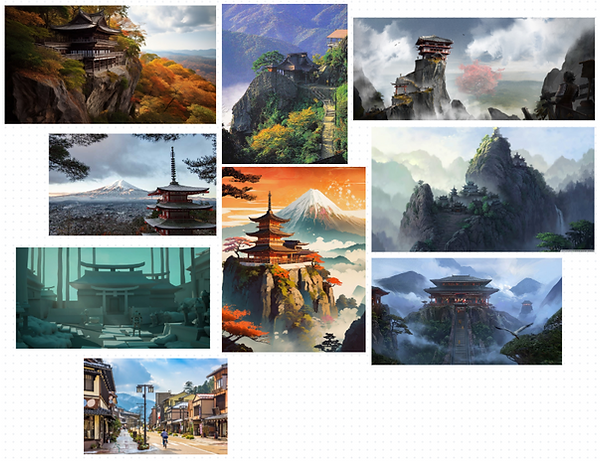
Although not required for this project, I wanted to incorporate some visual blockout elements to help convey the map’s theme. I deliberately saved this step for last to ensure that every design decision prioritised gameplay over aesthetics - gameplay balance was my main focus for a tactical shooter map. For the theme, I chose a Japanese temple/town built atop a mountain. To begin, I gathered a selection of reference images to guide the visual direction.
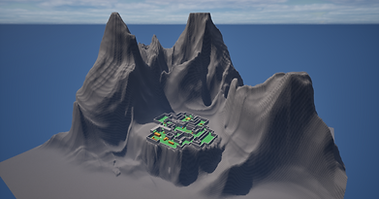
Next, I used the terrain tool in Unreal Engine to sculpt rough mountain formations, establishing the elevated setting. I then placed a basic large temple as the map’s visual landmark. Beyond aesthetics, both the temple and mountains serve a functional purpose - providing reference points for players to line up grenade throws and abilities.


After adding roofs to the rest of the map, colour-coding the buildings, and changing the lighting, the map was finished.
